

The human reference genome
One reference. Three billion letters. Infinite questions.
Omicser helps researchers orient themselves in genomic context before drawing conclusions.

Start here
The human genome, before any interpretation
Understanding scale and structure comes first. Numbers alone do not explain what a change in the sequence means.
~3 billion
DNA base pairs
The human reference genome spans roughly three billion base pairs of DNA across the nuclear genome.
23 pairs
Chromosomes
That sequence is organised into 23 pairs of chromosomes, one set inherited from each parent.
< 2%
Protein-coding DNA
Less than two percent of the genome directly codes for protein; much of the rest is regulatory or still poorly understood.
A variant only carries meaning in context
Genomic context
Where a variant sits — coding, regulatory, intronic or intergenic — changes what it could do.
Tissue context
A regulatory effect may appear in one tissue and be entirely absent in another.
Inheritance context
Zygosity, parental origin and family history shape how an observation should be read.
Evidence context
Published, reproducible primary evidence decides whether an interpretation holds at all.
Who we are
Omicser is a personalized research guide
Built by Madomic Kalin — Modern Applications for Diagnostics of Microbiology — Omicser supports researchers globally who need orientation, not verdicts. It explains where to look, what context matters and how to verify, for research and education only.
Fields
Five connected omics layers
Each layer answers a different question about the same biological system. Select a card to continue.
Genomics
The study of an organism's entire DNA sequence and structure.
Metagenomics
The study of genetic material recovered directly from environmental or clinical samples.
Transcriptomics
The study of all RNA transcripts produced in a cell.
Proteomics
The large-scale study of all proteins produced by an organism.
Metabolomics
The comprehensive study of small-molecule metabolites and chemical fingerprints in a cell.
Epigenomics
The genome-wide study of methylation, histone marks and chromatin state that decide which genes a cell can use.
Genomics
Madomic Gene Engine
Navigate the GRCh38 reference, simulate a single-nucleotide substitution, run it through public research databases, compare results and export an auditable record. Research and education use only — no real genome is modified.
Interactive research service
Madomic Gene Engine — variant simulation workspace
Test a single-nucleotide substitution against the GRCh38 reference and read what public research databases return for it. Nothing here edits, changes or engineers a real human genome. Research and education use only. Not clinical interpretation, diagnosis, treatment, genetic counselling or a laboratory report. Each variant is a simulation tested against the GRCh38 reference — no real human genome is modified.
Variant comparison — this session
Each variant is evaluated independently against the same GRCh38 reference. Rows are not cumulative edits. History lives in browser memory only and clears on reset or refresh unless you download it.
No variants checked yet. Build a substitution above and select “Check this change”.
Build a substitution and select “Check this change”. Only the constructed variant text is sent to the Omicser server; no other data is transmitted or stored.
Variant classification under ACMG/AMP and ClinGen requires multiple evidence categories, expert review, disease and gene context, and current expert-panel specifications. This engine only organizes research annotations from named public sources.
Genome Reference Consortium / NCBI — GRCh38
The reference assembly every coordinate on this page belongs to. A position without an assembly is ambiguous, so GRCh38 / GCA_000001405.15 is stated with every result.
HGVS Sequence Variant Nomenclature
The community standard for naming variants. It requires a reference sequence or accession alongside the coordinate system. This engine displays the accession and coordinates but does not perform full HGVS validation or generate validated HGVS expressions.
GA4GH Variation Representation Specification (VRS)
A specification for representing variation computationally so systems can exchange it unambiguously. This engine does not produce a conformant VRS object, so no VRS conformance is claimed.
Ensembl Variant Effect Predictor (VEP)
The source of the transcript consequence annotations shown here, retrieved server-side from the public Ensembl REST API.
ACMG/AMP consensus guideline — Richards et al., 2015
The consensus framework for clinical sequence variant interpretation. It requires multiple evidence categories, disease and gene context, and expert review. This engine never assigns an ACMG/AMP class.
ClinGen Variant Classification Guidance
Current expert-panel specifications that refine ACMG/AMP criteria per gene and disease. Classification is a documented expert process, not an automated output of an annotation tool.
Madomic Gene Engine is an independent explanatory research layer for variant simulation against the public GRCh38 reference. It is not affiliated with, endorsed by, or a replacement for Google DeepMind, AlphaGenome Atlas, a genetics professional, or a diagnostic laboratory. No ACMG/AMP or ClinGen classification is produced. Never enter or upload patient data. Eligibility and use remain subject to the current AlphaGenome Terms and Output Terms.
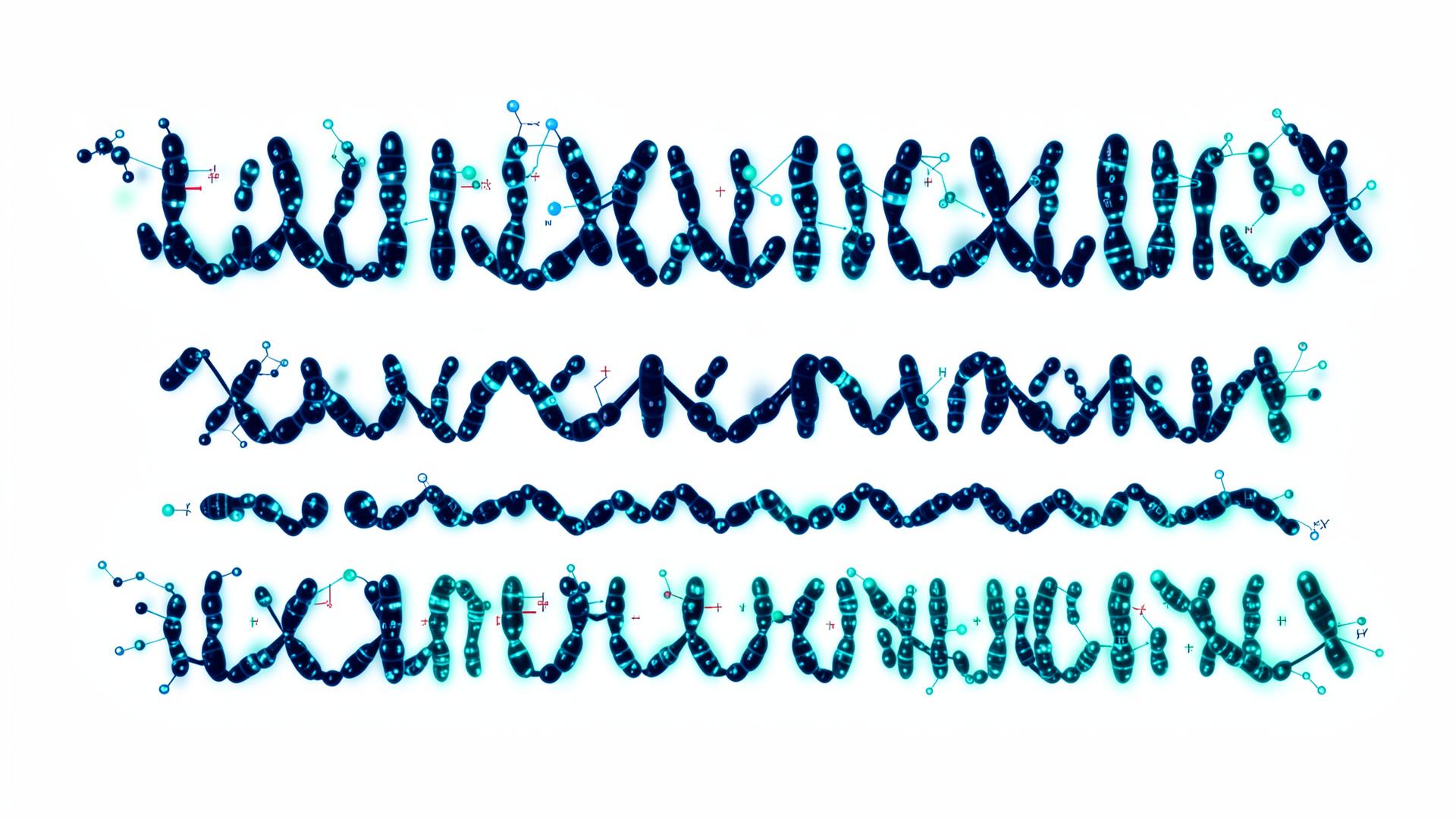
Illustrative chromosome ideogram
Illustrative sequence track
Schematic visualisation only — no scientific results are shown or implied.
Looking ahead
Future service roadmap
All roadmap items are planned concepts — they are not currently available clinical or diagnostic services.
Research navigation
Structured routes through public genomic resources so a research question is framed before any data is interpreted.
Maps, comparative genomics and phylogenetics
Richer genome maps and comparative visualisations across species to support evolutionary and structural reasoning.
Multi-omics study support
Guidance for designing studies that combine transcriptomic, proteomic and metabolomic layers.
Possible future laboratory services
Exploratory laboratory collaboration formats, subject to regulatory, ethical and quality frameworks.
Attribution
Scientific sources
Omicser references publicly available AlphaGenome work. It is independent of, and not endorsed by, Google DeepMind.